Showing posts with label PBL. Show all posts

Wednesday, 15 June 2016

Project Based Learning in Enviromental Sciences: using Gamification and Technology - By Learning is Fun

Learning is Fun is compose by: Alexandre Fonseca D‘ Andréa, Erika Tiemi Anabuki, Leonardo Emanuel de Oliveira Costa, Miguel da Guia Albuquerque, Vicente de Paulo Ferreira M. Sobrinho     

     Now it´s time to share our work plan with you. We (the group: Learning is Fun) believe that the learning process can be also a enjoyable experience, that we can use Projetc/Problem/Phenomenon/Passion based learning and gamification to engage the student in the learning process.

Check your ideas in the image below:


     All of us have our individual plan to change your pedagogical approach in our day-by-day activities. So be prepared to listening something in the "corridor radio" about the changes we are making in our classroom!

     And also we are planning a workshop in the IFRJ where Brazilian teachers can learning more about PBL. Our final workshop timetable can be changed, but you can check our first idea in the image bellow.


     For VET3 teachers and other Brazilian teachers... see you soon in "Terra Brasilis" and for our lovely teachers of Hamk University of Applied Sciences thanks four all the commitment with us and the third edition of the VET program.


Sunday, 24 April 2016

PROJET BASED LEARNING (PBL)


Hi everyone!

We are here to talk a little bit about Project Based Learning (PBL)! Last week Irma Kunnari (Principal Lecturer, Teacher Educator and Pedagogical Developer in HAMK, School of Professional Teacher Education) divided us in small groups and asked us to make a picture about what is PBL for us (see the figure below). These were the first step to start this issue with us (Brazilian Teacher´s in VET 3 program Cohort Spring - 2016), and the main objective of that activity was to assess our prior Knowledge about PBL.


Figure 1 - PBL (prior Knowledge)

These Picute were made by Alexandre D´Andrea and me, and I will briefly describe it right now. The PBL starts with a real problem that need to be solved. So the Students, the Teacher and the Stakeholders need to work in a collaborative way. First, they need to think about the problem and make questions about it. After that, in a dynamic way they need to use the Tools (Research, Devices, Techniques,...) and Resources (Financial, Equipments, Staff ...)  to find the Solution. 

This solution can be an Answer, a Product or a Process and based on these results, new questions, new tasks and new hypothesis can arise and other real problems can be assessed by Project Based Learning. 


***

At this weekend (23/04/2016 and 24/04/2016) Alexandre and I started to produce one short video to present the picture above and to show a little bit more about what we’ve seen about PBL in Valkeakoski Campus. To the readers that don’t know anything about Valkeakoski, let´s present it appropriately:


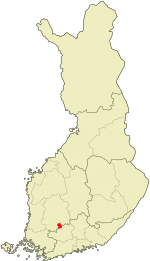
Valkeakoski is a town and a municipality in the south of Finland (if you want to learn more about the town: see these links: 01 and 02).


In the Valkeakoski Campus we visited three different institutions: Valkeakoski High School, Valkeakoski Vocational College and HAMK University of Applied Sciences. These three institutions work together in a large, cohesive Campus area.

You can watch your vídeo below:


***

Another task related to PBL I made in the last week with my Homegroup (Antônio dos Santos Jr, Conceição de Maria Cardoso Costa, Leonardo Emanuel de Oliveira Costa, Rita Rovai Castellan, Rodrigo Alves e Rodrigo Rossi) was one small presentation about PBL. In this presentation a question arose: What must have a project to be considered an instance of PBL?

Based on Thomas (2000) we can say that a Project to be considered a PBL must  have the following points:

1. PBL projects are central, not peripherical to the curriculum.

2. PBL projects are focused on questions or problems that "drive" students to encounter (and struggle with) the central concepts and principles of a discipline.

3. Projects involve students in a constructive investigation.

4. Projects are student-driven to some significant degree.

5. Projects are realistic, not school-like.

(Thomas, J.W. (2000). A REVIEW OF RESEARCH ON PROJECT-BASED LEARNING. )


To learn more about PBL, you can also access these links below:


We also separated another videos:


Resumo (Em português)


Conhecemos um pouco mais sobre o Aprendizado Baseado em Projetos (PBL) nestas três semanas aqui em Hämeenlinna. A primeira tarefa que fizemos em pequenos grupos foi montar uma figura que mostrasse nosso conhecimento a priori do tema. Esta tarefa eu realizei com Alexandre D´Andrea do IFPB. Num segundo momento com a minha família (Homegroup) aqui em Hämeenlinna realizamos uma pequena apresentação sobre PBL e durante este trabalho uma pergunta surgiu: O que um projeto deve para ser considerado um PBL? Depois disto, tivemos a oportunidade de fazer uma visita no Campus de Valkeakoski (uma cidade no sul da Finlândia). Estão presentes neste Campus três intituições que trabalham de forma integrada: Valkeakoski High School, Valkeakoski Vocational College and HAMK University of Applied Sciences. A ultima tarefa realizada neste final de semana relacionada com PBL foi a confecção de um vídeo de 2-3 minutos sobre a figura de nosso conhecimento a priori e nossa visita ao Campus Valkeakoski.


Links em português:


Monday, 11 April 2016

Group 1 - Reflections of our coming to Finland


When we found the opportunity to come to Finland a lot of thougths come to our minds. We are very engaged in our institutions so coming here could represent to let down some projects in Brazil. We had to count with our colleagues to help us with the work left back.
We were worried about our families, our aging parents, our children. But in the other hand it is just three months and we have the opportunity to reflect about teaching, learning about Finland education and make contact with a lot of Brazilian teachers. After these thougths we had to talk to our directors to receive the permission to go studying abroad and to write our projects. When we started writing our projects we met teachers that came from VET I and VET II to share experiences and research the needs of our institutions.
In Brazil, when speaking of the Finland, the people remember the education, the nordic mythology, the pilots of Formula one, and others examples. However, the country is so much more that . Finland is a strong nation.

  • Exchanging experiences
We are a group from different places of Brazil. We are from north, south, center, southeast and northeast of Brazil. So, we're from different Institutes and each one have a personal experience in teaching. One of the most important things to come to VET teachers program in Finland is exchanging experiences, we can learn more with finnish teachers and students and we can get more knowledge with ourselves.

  • Our english proficiency
Staying in Finland is a great opportunity to know Finnish culture. For us this opportunity is good to enhance our English. In the classes we can practice our English in writing, reading and speaking a lot. It's an excellent opportunity knowing that we can teach in English language in Brazil. When you teach your classes in English, your classes are opened to the world. So, you can exchange experiences and make networking.

  • Our projects
Brazilian education is largely based on traditional teaching approaches. The main resource used are the lectures delivered in a teacher centered model. In Brazil we call it “cuspe e giz” (spit and chalk). We think that Project Based Learning is a great and innovative way to perform a student centered education and immersing in the finnish education will be the chance to see it as it develops. Although there are different areas like electrical engeneering, agronomy, geography, math and others among the VET teachers, we all think that PBL is a great tool for every teacher. We already learned in Finland that we can transform PBL in Passion Based Learning,

  • Immersion in the culture
The experience in VET III, at Finland, is an opportunity to open new horizons about the Finnish education. It is an opportunity to acquire experiences about the finnish life style, the culture, the gastronomy, the different forms that the finnish peopple see the education. This atmosphere provides to learn as “Linking People”. Linking people is an opportunity to meet people and share knowledge. This program  offers to each of us the opportunity to learn about each Instute and start a network of knowledge and also build other relationships such as friendship and team spirit. In Brazil, we are not used to truly share our ideas with other Institutes, however we believe that "Linking people" is truly build shared knowledge, and then we will have better results.
For us the VET III process was easier, because we rely on the contribution of other teachers. Participants of VET I and II spoke several tips about the city, the behavior of people who live here and the program as well. This program provides many opportunities in the changing perspective of behavior as Professor and as a citizen. This course is expected because we have a plunge opportunity in the culture of a country completely different from ours. Finland breathes education and we are feeling that as we start to investigate it.

The attention provided by the staff of HAMK, specially Marja and Sara, and all the teachers and coordinators, was fundamental for the success of the partnership between Brazil,Finland, and the VET programme.

Sumário (Less is More)
Quando pensamos em vir para a Finlândia diversos questionamentos vieram à nossa mente. Nós estávamos preocupados com nossos familiares e com o nosso trabalho, apesar de serem apenas três meses. Estudar na Finlândia é uma grande oportunidade de conhecer a cultura finlandesa e também melhorar o nosso inglês. A educação brasileira é amplamente baseada em abordagens tradicionais de ensino e pensamos que o aprendizado baseado em projetos é uma maneira inovadora para realizar uma educação centrada no aluno. Essa imersão na educação finlandesa será a chance de observar como o processo se desenvolve. A experiência dos VETs anteriores contribuiu para que a nossa vinda para a Finlândia fosse mais fácil, além disso a colaboração da equipe de HAMK, especialmente Marja e Sara, e todos os professores e coordenadores, foi fundamental para o sucesso da parceria entre Brasil, Finlândia, e o programa VET. 
https://www.facebook.com/brianjyc/videos/10205423818866432/
- Flávio Lopes, José Luiz Amado, Miguel Albuquerque, Patrícia Lopes, Rosângela Melo, Wlamir Teixeira