Thursday, 19 May 2016


Can competence distinguish humans and machines?


The workability, understood as productive dimension component of social life and therefore citizenship is the ultimate goal of vocational education. At the core of this type of education is the process of appropriation of the condition or set of conditions to produce benefits - goods and services. The new vocational education shifts the focus of the educational work of teaching to learn, what will be taught to learn what it takes in the contemporary and future world. The skills while actions and mental operations, articulate knowledge (knowledge, the articulated information), skills (psychomotor or know-how developed cognitively) and socio-cultural knowledge and the values, attitudes (knowing how to be, the predispositions for decisions and actions, constructed from aesthetic references, political and ethical) consisting of articulated and mobilized in professional achievements with required quality standards, normal or distinctively, the productions in a professional area (BRASIL, 2000).   

Even though the competences in a given situation or course may be acquired in both student based learning and teacher based learning, is the former approach that can bring the more significant outcomes to the students.  


Answering the primary question, competence distinguishes humans and machines. Machines could be programmed to make automatic and intelligent decisions (knowing), also it performs many movements more precise and faster (doing) however, only humans could feel the emotions and make decisions based on their mind and heart (being). After visiting one of the fundamental level schools, many of the new knowledges learned during our classes could be observed. The children are prepared to be much more than only "boxes full of science's knowledge" but better part of the society. It was amazing see each child helping the others, saying good adjectives to their pairs. During all these activities, they learn math, finnish, english and so forth. Competence is not necessary only to get a good job and pay the bills, it is a matter of survive, a way to live in a healthy society.  


So, how to learning built a house considering the approach of competence based curriculum? 

Curriculum, from Latin, means path of life, a racing. For an education approach it could be steps to be achieved by a student in its self-development in any area. It includes new abilities, training and knowledge. It used to be focused on disciplines, lectures, however,  for the future, it should promote significant professional learning. 

Several steps are necessary to build a house starting from the land's choice up to painting and so forth. Wall, floor, window's assembly are necessaries competences to achieve the objective. However, for to learn how to perform all these tasks, we can follow different paths guided by the development of skills that lead to the final product, which is the construction of the house. The curriculum in this process is the master line that allows students to learn in practical way. 
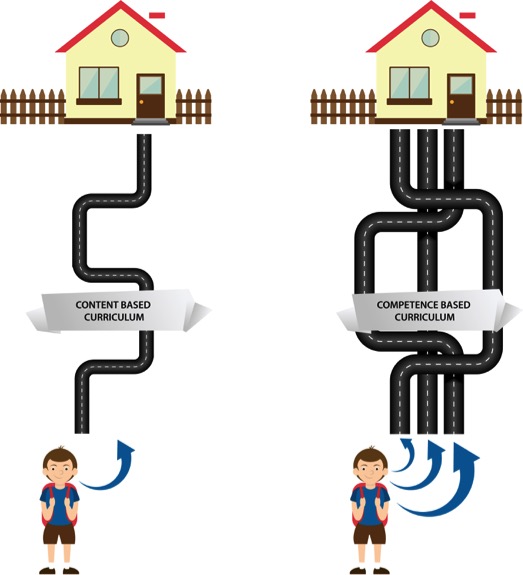


The perfect alignment means that the teacher must be prepared to connect the curriculum, the pedagogical methods, and the assessment tools and criteria to achieve the intended outcomes of the learning activities proposed. In this context, all these key components are in tune and the students can reach an appropriate environment to learn, and the expertise areas must be aligned with the learning outcomes associated. In this context, we’ve managed to perceive that both Finland and European Union are concerned about this alignment, in order to improve the employability. In this way, the target of the reform of VET in Finland aims to improve the capacity of vocational education to respond to the skills needed. As a correspondence in Brazil, the legal basis of vocational education in the country (BRASIL, 2000) already allows the use of competence based curriculum in the Federal Network of Education, Science and Technology, although a huge effort must be made to make this approach come true in the day by day teaching practice in our schools, considering the scale of the continental country and the inequalities of the society 

In Brazil, after some interviews with managers and directors of international companies in Manaus-AM (see picture below), it's almost a consensus that technical knowledge are receiving less importance than competences. Time management, group working and solving conflicts abilities are some examples of competences required for hiring process. In that way, schools must provide more than technical training but "human relationship science". The question is: how to do it in a collaborative work between companies and schools? HAMK is an interesting example of success on its business course, where students are guided by counselors in a way that services are provided by them inside companies. These students feel the business environment and learn about how they must behavior as a real employee. 


The intended outcomes must be related to the working life, in which the companies or employers play an important role in helping the teacher in the regulation process (the need to adapt the assessment, the learning environments and the professional profile in accordance with que working world). In this sense, it is fundamental to recognize the importance of some key moments of the student's learning life, as observed in the ideas competition in Lahti (Sense 2016) and in Seinäjoki (skills competition). In both cases, stakeholders of the working sector and schools worked together in the assessment of the students, bringing real life into the competence based curriculum approach, far beyond from the limit.  

In the example given (the house metaphore), the connection with the working world is made when the students meet the real situations, like in Vocational College of Applied Sciences/HAMK Valkeakoski campus/Valkeakoski Vocational Institute (visited in 20th April), in which we could observe, as an example, that the students are used to learn how to built a house in practice (learning by doing) and in accordance with the market needs. Also, the assessments of skills and the evidence of outcomes are made considering real life situations. Some pictures are shown below:


In competence based curriculum the learning environments are not restricted to the classroom. On the contrary, work environments, companies, entrepreneurships and adapted classrooms with pedagogical design are useful in the teaching learning process. The learning outcomes can be assessed continuous  

So, competence really seems to be a human inherent caracteristic, mainly because of the feelings involved in the learning process. Then, competences can be used to put humans and machines in different places. In this approach, the learning outcomes in vocational education teaching are much more true and significant with a competence based curriculum. 

 "Developing competence is a hard working process and takes time but it is something for lifetime"


REFERENCES 

BRASIL. Ministério da Educação. Educação Profissional. Referenciais Curriculares Nacionais da Educação Profissional de Nível Técnico. Brasília. 2000. 136 páginas. Il. Available at <http://portal.mec.gov.br/setec/arquivos/pdf/introduc.pdf>. Acessed in 18th May 2016. 

According to the Finns, What is a Competence Based Curriculum?

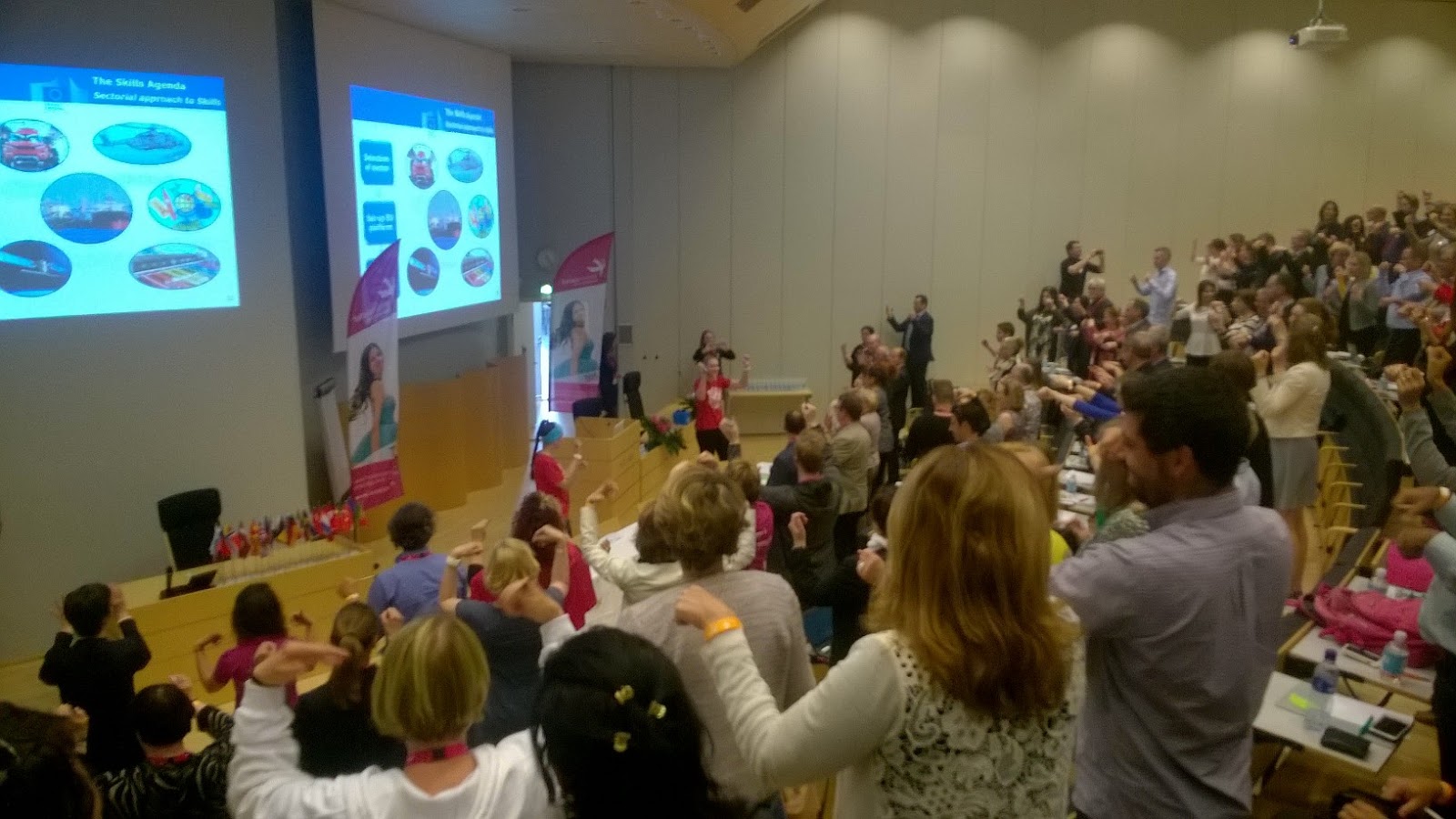
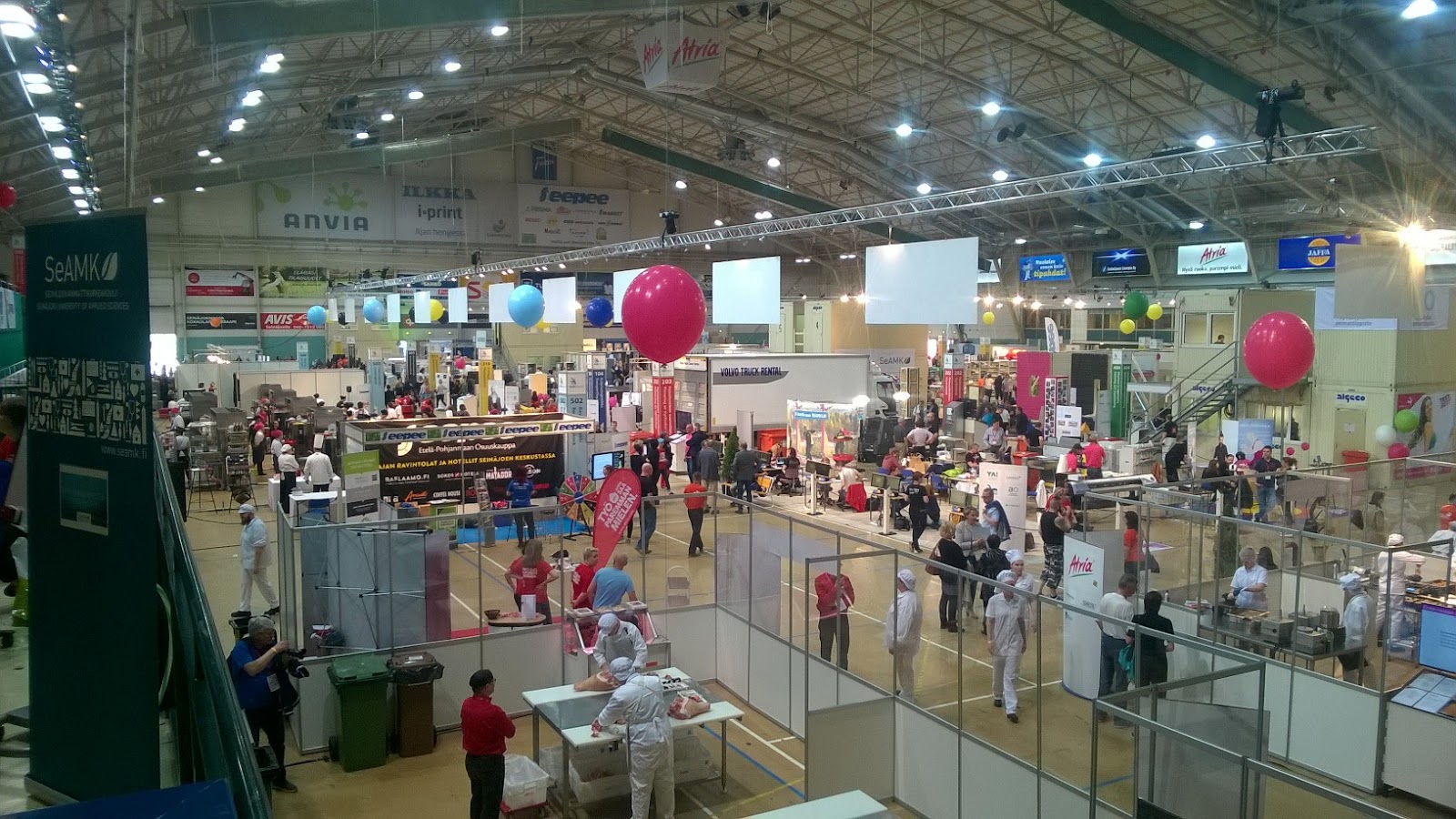
In this month, we went to Seinäjoki, Finland, where we could see the Finnish National Skills Competition/2016. It is an important meeting for Finns, because in this event they can show for everyone the best what they have in their Vocational Education Schools. There, we took part in a panel: “Strengthening the Competence Based Approach in Finland - This is how we did it”, when we could hear different speakers and some points of view about Competence Based Curriculum. They talked about the Finnish experience, history and obstacles, future challenges regarding European Union, and also assessment and competences.

WP_20160510_11_23_10_Pro.jpg

Afterwards, we saw learners (students) running some tasks, a good opportunity to check their competences. They were in simulated scenarios, supported for real Companies, where they had been cooking, controling machines and industrial plants, building houses, planning new bussiness, take care of animals. At the same time, coaches (teachers) were so proud about the Finnish Vocational Education System and happy for sharing their experiences. They also checked how they would improve the Competence Based Learning process.

So, after Senäjoki visit, we can tell you: yes, it is a fact! Vocational Education in Finland works according to Competence Based Curriculum and they can show you that.

WP_20160510_14_04_23_Pro.jpg


At this point, you might be thinking how amazing everything previously described would be. But, let’s ask you something, what is a Competence Based Curriculum for you? We ask you it because we are in Finland trying to solve the same question. Then, right now, we are going to present you some ideas about this theme.

First, “Curriculum” might be understood as a pathway. It means that has a beginning and an end. Each student must walk it in his/her own way, regarding his/her previous knowledge. He/she can do it at the same time, or not, because the obstacles to overcome can be the same or not, regarding his/her special needs and his/her prior experience. But, the goal (competence that should be developed throughout the learning process) must be equal and clear for everyone (teachers and students). Teachers should support students (vocational and educational guidance) and try to help them throughout the learning process. Schools should provide two things: 1) a suitable learning environment, specially for collaborative work and digital tools, regarding the 21st century needs, and 2) a flexible curriculum, which allows students to choose their own pathway looking to the same aim.


Second, according to Finland Education System, “Competence” is a multiscale concept, which has been stated as the ability for knowing, doing and being something. To make a long story short, if you want competent students, you must help them learn applying “Learning by Doing Method”. It is uncommon Brazilian School asking: "What is the most important: know or do? Theory or practice?"


We also believe the most important about Competence is that it should be socially relevant. If so, it probably will make students more motivated to learn and show their outcomes. Here, we can see the point where have to happen the alignment between the curriculum and the market place needs. Beyond to helping to motivate the students to learn it can also assist them to find a job after the school. The employability would be the main target of the any educational system and students with the suitable competences would make it easier.

Third, maybe the critical point, “Assessment” must be a tool to check the alignment between Curriculum and Competence. It means that we can follow if the Student has reached some competence after traveled his/her own curriculum. For it works, assessment should be more formative than somative, allowing teachers and students regulations.


Bear in mind, the students’ competence can be access by many ways. For instance, students might show their competence doing practical activites, making videos, solving test, writing assignments, or anything else that their criativity permits.


To summary up, we can say a Competence Based Curriculum is a pathway that must be walked for a student on his/her time an way, supported by teacher and school, to reach a specific competence after a learning by doing process. Creating new partnerships with companies is an interisting way to build an attractive Curriculum and to keep students motivated. Maybe, it is one possible answer about Finland Vocational educational system and why it has a little drop out rate.


Trust Family: Antônio, Conceição, Leonardo,Rita, Rodrigo Alves, Rodrigo Rossi

Wednesday, 18 May 2016

Competence-based Curriculum by Buscape Family

Hello Everybody!

Here is another post of Buscapé Family about Competence-based Curriculum. What is this? How can we apply it in our context? The result of our discution and reflection you can access in our WikiPage, CLICK HERE and see our collaborative work. Follow the home page of our Wiki. We will be happy if you visit us.
In the link HomeGroup Activities/Curriculum you will find the Conceptual ideas, which brings our original reflection about:
- What is competence?
- What is Curriculum?
- What does alignment (see Biggs, 2003) mean in practice?
- How is collaboration created with the region and with the companies?
- How collaboration with the region and the companies are related to Creation of intended learning outcomes in the curriculum:
a) Implementing learning processes?
b) Assessing competences of students?
c) How can you apply these ideas in your own context?

The second Topic in HomeGroup Activities/Curriculum there is a guideline, where we discoursed about : 
- How to implement a curriculum with PBL?
- How Student-centered approach can help to create Competence-based Curriculum?
- What have been done to implement Competence-based Curriculum?

After all of this, we discussed and constructed individual teaching plans. We tried to figure out and translate in words how we could apply all the conception we have learned in Finland into Brazilian Vocational Education context.

So, we structured 6 teaching plans, integrating PBL and competence-based Curriculum conceptualization in our area of knowledge. Then, we invite you to read ours plans and collaborate with our initial idea about how to implement the Finnish's way of teaching and learning.
Plan 6 - Entomology 

Tuesday, 17 May 2016

Trust Family

How can a teacher use digital tools in pedagogically meaninful ways?


Today, we would like to show you how a coach can use digital tools in a pedagogically meaninful way. Is it possible? Yes! But it will demand lots of time for planning. So, we spend some time thinking about a good example for you. We made a collaborative ThingLink together to start the process and try to use this tool to motivate and to engage students through the learning process.


Openning


We proposed a central theme to integrate different areas and subjcets to explain our students how “Artificial Insemination Module” will be organized and how the teachers would assess students’ learning outcomes. At the end of this module, students must show specific competence (see below) when perfoming an artificial insemination.


Target of assessment
Criteria of assessment
Satisfactory (1)
Good (2)
Excellent (3)
Planning an artificial insemination process, selecting correct supplies and tools
works according to requeriments, needing ocasional supervision
works according to requeriments, mainly independently
works independently according to requeriments, avoiding to waste supplies
Etics, health, safety and ability to take action
works according to etics and safety guidelines of the work environments, needing guidance
works according to etics and safety guidelines of the work environments, mainly independently
works independently according to etics and safety guidelines of the work environments
Good hygiene practice during the artificial insemination process
works according to hygiene requeriments, needing ocasional supervision.
works according to hygiene requeriments, mainly independently.
works independently  according to hygiene  requeriments.
Using softwares to mannage the artificial insemination process
uses the information technology needed in his/her work, needing occasional supervision
uses the information technology needed in his/her work, partly independently
uses the information technology needed in his/her work independently


Running the project (example)


Presenting the project to students


Dear students, at first you must explore the Thinklink below. There, you will find tips for help you out to learn about Artificial Insemination and some themes related, such as hygene, planning and fertilization process. After that, we will perform this at the lab, using sperm and cows. For you enjoy this experience, you must improve your learn basics subjects.
One assessment for you, is going to be a competence demonstration of your learning outcomes using a social media. Be creative!! You must communicate by a  video or post in a blog demonstrating you performing an artificial insemination in cattle. The other one is cow getting a pregnancy!

I suggest you to keep in touch with your group using the WhatsApp. Making Groups is important for your future and is a good way to improve communication skills and make a virtual place where students can follow the timetable of activities related to the module, receive reminder of the tasks they need to do during the module and also to the students schedule a meeting with teacher and ask for help.


Closing


Now, after you reading our idea and feel yourself as a motivated student, think if you (as coach) could show your students developing their competences and creating a dialy on Instagram, where you could publish students’ competence demonstration and other thoughts. Lets try new things! Your students will live in a digital world and you should help them in this pathway.

Antônio, Conceição, Leonardo, Rita, Rodrigo Alves, Rodrigo Rossi

Competence Demonstration - Digital Tools

Buscapé Family - 17/05/2015

We, as #VET3 students, received the task to develop our competence related to the usage of digital tools.


When we think about learning-doing it is necessary to “move our body” and try to show how the digital tools can help us during our teachers life!  There are differents digital tools available online, which are easy and free.

So, our family demonstrates in this post how teachers can use two (2) digital tools in pedagogical ways, wiki and instagram. Wiki is shown as experiences constructed with real learners. On the other hand, we constructed with instagram one example of how teachers can integrated it in their practie.

EXAMPLE 1: WIKI
Competences focused
  • Use Portuguese sign language in scientific  text;
  • Building  knowledge  in a digital collaborative environment;
  • desing learning process in authentic learning environment utilizing wiki.

Teaching Approach:
  • showing compentences should be achieve;
  • Group formation;
  • Flipped classroom strategy;
  • Discussion and feedback;
  • Follow the learning process

Assessment:
  • The learner was evaluated according to the formative assessment design. When the period of self-study and groupwork went to the end, the teacher accessed the theme and gave online and in classroom feedback. It was possible to the learners demonstrate their development learning summarizing and prensent their knowledge about the topic.
  • The digital tool wiki was used for the student as learning portfolio.

EXAMPLE 2 - INSTAGRAM
Theme: Landscape

At the first time, we tried to define some competences and skills, but we had some difficulties because we didn’t know exactly what’s the difference between them. So, we tried to work in another way. First of all, we defined the theme that we would propouse to the students learn about, and we tried to suggest some competences and skills to develop using Instagram as a learning digital tool. Again, we had problems. Each one of the Buscapé Family has one different and divergent concept about what is competence and skill. So, we couldn’t easily find a convergent point of view.

Competence/Skills focused
  • building knowledge about Landscape as part of social richness.

Teaching Approach
  • Create an account in Instagram App;
  • Guiding the learners in how to use the app;
  • Construct the #buscapevet3;
  • Guide the student to take pictures of differents landscapes;
  • Post some informations about Landscape on Instagram;
  • Interaction between the students by comments in Instagram`s post;

Assessment
  • Datas that the learners collected and the interaction according to the competence/skills focused.
Below, there is all post from our group about the theme worked.
#buscapevet3

P.S.
After the task done, we realized the necessity to be clear the ability and skills to reach the goals of the activity and define the criteria to assess.